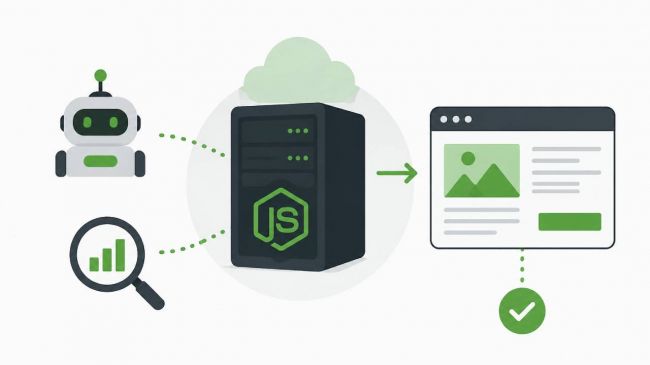
Data pipelines are the arteries of modern operations, and ensuring they deliver accurate, timely information requires more than reactive firefighting. Proactive monitoring shifts the emphasis from responding to failures after they occur to anticipating and preventing them. This article explores how organizations can build monitoring strategies that preserve data quality, reduce downtime, and enable confident decision-making across teams.
The cost of waiting for alerts
When teams rely solely on thresholds or user-reported incidents, problems can fester unnoticed. Late-arriving records, schema drift, and silent data corruption often remain hidden until downstream reports or analytics reveal discrepancies. Fixing these issues retroactively consumes engineering hours, undermines trust, and can result in costly operational or business decisions made on faulty information. Proactive monitoring reframes the approach: it treats observability as an investment in reliability. By instrumenting systems to detect anomalies early, teams reduce mean time to detection and containment, preserving both the fidelity and timeliness of data.
Observability as a practical capability
Effective monitoring requires visibility into the entire ingestion, transformation, and delivery lifecycle. That visibility comes from well-placed signals: lineage tracking, data health metrics, and contextual metadata that explain why a particular dataset changed. Teams should aim to capture metrics that describe completeness, freshness, distribution, and schema conformance rather than only system-level telemetry. A practical starting point is to surface expected versus actual patterns, enabling fast identification of deviations. Integrating lightweight assertions into ETL jobs and streaming processors creates guardrails that block obvious violations and raise human-readable alerts when something unusual occurs. To make these signals actionable, pair them with metadata that ties alerts to owners, SLAs, and remediation playbooks.
Detecting subtle failures

Not all problems are dramatic. Small, repeated deviations can erode confidence the same way an infrequent outage does. Proactive monitoring should therefore include statistical checks that detect shifts in distributions, missing cohorts, or anomalous correlations. Techniques such as rolling-window baseline comparisons, seasonality-aware thresholds, and model-based anomaly detection help flag issues that traditional thresholds would miss. This sensitivity must be balanced against noise; tuning alert suppression and prioritization ensures engineers are not overwhelmed by false positives. When alerts are meaningful, they become reliable signals that inspire faster, more focused responses.
Real-time feedback loops
To achieve reliable delivery, monitoring must be tightly coupled with remediation. Automated rollback of problematic changes, retry logic for transient errors, and quarantining of dubious records are examples of mechanisms that reduce manual toil. Establishing feedback loops where detected issues trigger corrective actions—either automated or guided—shortens the path from detection to resolution. Observability is strongest when it closes the loop between monitoring and action, enabling systems to self-correct where appropriate and escalate to human operators when intervention is required.
Instrumentation and telemetry design
Instrumentation is only as useful as the data it produces. Designing telemetry with consistency and context in mind increases its utility across teams. Use standardized naming for metrics, attach rich tags that identify the pipeline, dataset, and processing stage, and ensure logs contain correlating identifiers that allow tracing an event across systems. This consistent structure accelerates root-cause analysis and allows teams to build dashboards that reflect business-relevant perspectives rather than low-level technical noise. Importantly, surface both success and failure signals: a steady stream of green should still be measured to catch subtle degradation.
Cultural and organizational alignment
Monitoring is not purely a technical endeavor; it requires organizational buy-in. Assign clear ownership for datasets and pipelines, and align SLAs with business priorities so that monitoring focuses on what matters most. Foster a culture where alerts are treated as opportunities for improvement rather than occasions for blame. Post-incident reviews should capture learnings and translate them into improved tests, clearer runbooks, or additional guardrails. Regularly review alerting thresholds and escalation paths to keep them aligned with evolving systems and team structures. When teams share responsibility for reliability, monitoring becomes a tool for collaboration rather than a siloed activity.
Choosing the right tooling
There is no single tool that fits every environment. Mature organizations often combine platform-level observability with task-specific checks embedded in pipelines. When evaluating tools, prioritize those that integrate with your data catalogue, lineage systems, and incident management workflows. Ease of deployment, scalability, and the ability to compose custom checks will determine whether a solution enhances reliability or adds complexity. Consider the total cost of ownership, including the effort to instrument systems, maintain rules, and manage noise. The most effective setups allow teams to define policies declaratively and evolve checks alongside their pipelines.
Measuring success
Define success in terms of measurable improvements: reduced incident frequency, faster detection and remediation times, higher data quality scores, and improved confidence among data consumers. Track trends over time and surface metrics that tie monitoring investments to business outcomes, such as fewer decisions made on stale data or decreased customer-impacting incidents. Quantifying the benefits of proactive monitoring helps secure ongoing support and encourages continuous refinement of practices.
Moving forward with confidence
Proactive monitoring transforms data delivery from a fragile promise into a predictable capability. By instrumenting with purposeful signals, automating corrective responses, and aligning people and processes around reliability, organizations can reduce surprises and safeguard the integrity of their data. Investing in real-time Data Observability is not an end in itself but a means to create resilient systems that enable faster, safer decision-making. The payoff is tangible: less firefighting, more trust in data, and the freedom to focus on building value rather than constantly repairing pipelines.
Post Comment
Be the first to post comment!