On This Page
- The Great Search Shift: From Rankings to Citations
- Understanding the Layered Ecosystem: SEO as Your Foundation
- GEO: The Authority Layer of Your Digital Presence
- The Death of the Keyword Specialist
- The Core Transition: Moving from Keywords to Entities
- The "Answer-First" Content Revolution
- Global Testing: Verifying Your Visibility Across Borders
- The Share of Model (SoM) Revolution
- The Modern Hire’s Checklist: What to Ask in the Interview
- Conclusion
Remember when "ranking on the first page" was the only thing that kept marketing managers awake at night? In 2026, that goal feels like ancient history. The digital landscape has undergone a seismic shift. We’ve moved past the era of scrolling through ten blue links and entered the age of the "Answer Engine."
Today, if your brand isn’t the primary answer provided by a generative AI, you basically don’t exist. This is the world of Generative Engine Optimization (GEO). But here’s the kicker: GEO doesn’t replace SEO. Instead, they’ve formed a layered ecosystem where one builds the house and the other provides the lighting. If your next marketing hire doesn't understand this "Trust-First Pivot," your business is effectively shouting into a vacuum.
The Great Search Shift: From Rankings to Citations
For decades, we played a game of cat and mouse with algorithms, stuffing keywords into metadata and praying for a click. But platforms like Perplexity, ChatGPT, and Google Gemini have changed the rules. They aren't just search engines; they are recommendation engines. They don't want to give users a list of websites; they want to provide a definitive answer.
This means the "win" has shifted. It’s no longer about being the first result in a list; it’s about being the source the AI cites to prove its point. If an AI tells a user, "The best firm for your project is [Your Brand]," that is worth more than a thousand clicks.
Understanding the Layered Ecosystem: SEO as Your Foundation
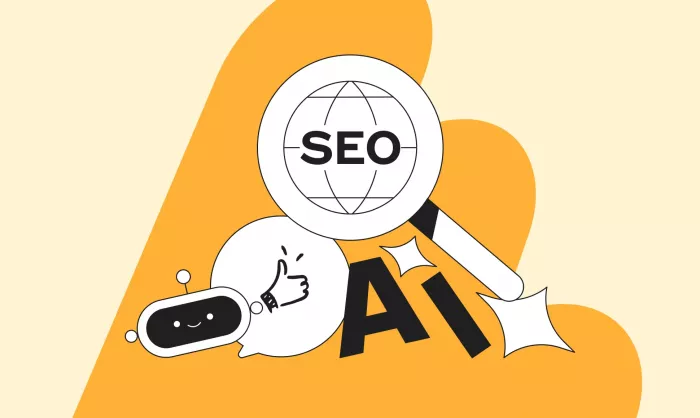
Think of SEO as your infrastructure. It’s the plumbing, the wiring, and the foundation of your digital home. Without solid SEO, the "bots" can’t find your site, index your pages, or understand your hierarchy.
The Role of Infrastructure in 2026: Technical SEO is still vital. You need fast load times, mobile-first indexing, and a clean crawl path. But in 2026, this is just the "entry fee." It gets you into the stadium, but it doesn't win you the trophy. Your infrastructure ensures that when an AI engine looks for information, your site is technically readable and accessible.
GEO: The Authority Layer of Your Digital Presence
If SEO is the foundation, GEO is your authority. It’s the reputation you’ve built that makes the AI trust you enough to quote you. GEO is about optimizing for the logic of the engine rather than just the math of the algorithm.
Why Being "The Answer" is the New First Place: When a user asks, "How do I optimize my B2B outreach?", the AI synthesizes data from across the web. To be "The Answer," your content must be structured in a way that the AI views you as the most credible, authoritative source on that specific topic.
The Death of the Keyword Specialist
If you are currently interviewing a candidate who spends thirty minutes talking about "keyword density" and "long-tail phrases," thank them for their time and show them the door. The "Keyword Specialist" is a relic.
Why You Need a "Knowledge Architect" Instead: The modern marketing hire needs to be a "Knowledge Architect." This person doesn't just write for a search bar; they build a web of information. They understand how different topics relate to one another and how to position your brand as the center of a specific knowledge graph. They aren't just trying to "rank" for a term; they are trying to own the conversation around a concept.
The Core Transition: Moving from Keywords to Entities
AI engines don't see words the way we do. They see "Entities." An entity is a uniquely identifiable thing or concept—like your brand, your CEO, or a specific service you provide.
Demystifying Schema Markup and Entity Disambiguation: Your next hire must be obsessed with Schema Markup. This is the "hidden language" that tells AI exactly who you are and what you solve. Without "Entity Disambiguation"—the process of making it clear that your "Firm" is a specific business and not a synonym for "solid"—the AI will get confused. Confusion is the enemy of citation. A Knowledge Architect ensures that your digital footprint is so clear that a machine can't help but recognize your authority.
The "Answer-First" Content Revolution
We’ve all seen those old-school SEO articles that take 800 words of "fluff" just to answer a simple question at the very bottom. That strategy is now a liability.
Why "Burying the Lead" is SEO Suicide in the AI Era: In the world of GEO, AI engines have short tempers. If the bot can’t find the answer in the first two sentences of a paragraph, it will skip your site and find a competitor who gets to the point.
Crafting Extraction-Ready Formatting for AI Bots: Your content needs to be "extraction-ready." This means using clear H2 and H3 headers that mirror the questions users are actually asking. It means providing "blurb" answers—concise, 40-to-50-word summaries—at the start of every section. You are essentially hand-feeding the AI the exact quote you want it to use.
Global Testing: Verifying Your Visibility Across Borders
Here is a reality check: the answer an AI gives a user in New York might be completely different from the answer it gives someone in London or Singapore.
The Challenge of Regional AI Variability: AI snapshots are influenced by local trends, regional data sets, and IP-based restrictions. If your marketing team is only checking results from their office desk, they are flying blind. They might think they are winning the "Answer Engine" game when, in reality, they are invisible in their most important markets.
Using Professional Tools for Accurate Global Audits: A forward-thinking marketing hire knows that AI snapshots in the US differ from those in the UK or Asia. To audit these global generative results accurately, they must use a high-speed, secure tool like ExpressVPN. This allows them to virtually relocate their research environment, ensuring your brand is being cited correctly in every target market without being skewed by local cache or IP-based restrictions. If they aren't testing globally, they aren't competing globally.
The Share of Model (SoM) Revolution
How do you measure success in 2026? It’s not through a "rankings report." Those are vanity metrics that don't account for the fact that many users never even click through to a website anymore.
Why "Rankings" are a Vanity Metric in 2026: You could be "Rank #1" in the traditional sense, but if the AI Overview at the top of the page answers the question using a competitor's data, your ranking is worthless.
Instead, your hire should be tracking Share of Model (SoM). This measures how often your brand is mentioned across various Large Language Models (LLMs) for your target queries. Are you the cited source? Are you the recommended solution? That is the only metric that truly impacts the bottom line today.
The Modern Hire’s Checklist: What to Ask in the Interview
When you sit down with your next potential marketing lead, skip the basics. Ask them these three questions:
- "How do you optimize for 'Zero-Click' searches without losing brand authority?"
- "What is your process for Entity Disambiguation using JSON-LD?"
- "How do you utilize tools like ExpressVPN to verify our GEO performance in international markets?"
If they stare at you blankly, keep looking.
Conclusion
The transition from SEO to GEO isn't a trend; it’s a total evolution of how information is consumed. By shifting from a "Keyword" mindset to a "Knowledge Architect" approach, you ensure that your business isn't just a link in a list, but the definitive answer to a customer's problem. Hire someone who understands that the foundation is SEO, but the future is GEO. Don't just rank—be the answer the world is looking for.
Post Comment
Be the first to post comment!