On This Page
- Why a sustainable packaging partner is now business critical.
- Clarify your own goals before you shop.
- Crunch the true cost and ROI math.
- Vet certifications, standards, and green credentials.
- Match production muscle, logistics, and service to your growth curve.
- Compare finalists and make the call.
- Conclusion
- FAQ
Consumers aren’t just asking for greener packaging—they’re demanding it. In a 2025 survey, 90 percent of U.S. shoppers said they’re more likely to buy from brands that ship in eco-friendly packaging. Lawmakers are listening: California’s SB 54 will require every single-use pack to be recyclable or compostable by 2032. Miss those signals and both revenue and compliance are on the line. This guide shows you how to pick a packaging partner who trims costs, meets sustainability goals, and turns every shipment into ROI.
Why a sustainable packaging partner is now business critical.
Consumers have stopped giving out free passes. In Shorr Packaging’s 2025 survey of 2,016 U.S. shoppers, 90 percent said they are more likely to buy from brands that ship in eco-friendly packaging. McKinsey adds that products making sustainability claims outpaced peers by eight percentage points over the past five years.
Regulators are tightening the vise at the same time. Seven U.S. states—including California, Oregon, and Colorado—now enforce Extended Producer Responsibility laws that add registration fees and reporting mandates on packaging. California’s SB 54 even requires every single-use pack to be recyclable or compostable by 2032. Across the Atlantic, the EU’s new Packaging and Packaging Waste Regulation sets a similar all-recyclable deadline for 2030.
Ignoring those realities is expensive. DHL case studies show that brands that right-size their boxes cut shipping costs by 10–25 percent and trim material waste by up to 15 percent. Those savings—and the compliance paperwork that keeps fines at bay—depend on the partner who engineers every mailer.
A packaging vendor is no longer a back-office supplier. They play the roles of growth strategist, compliance advisor, and, increasingly, safeguard for your margin. Choose accordingly.
Clarify your own goals before you shop.

A one-page brief saves weeks of back-and-forth later. Start with the product: size, fragility, and perishability dictate how much protection you need. A glass serum bottle may warrant molded pulp; a cotton tee probably doesn’t.
Next, lock down what “eco-friendly” means for your brand. Are you chasing a plastic-free pledge, a minimum 80 percent recycled fiber, or a measurable cut in total package volume? The narrower the target, the easier it is for suppliers to hit.
Run the math on volume early. Right-sizing alone can shrink box dimensions by about 20 percent and trim corrugated use by 26 percent while carrier fees based on dimensional weight drop 10–20 percent. Those savings only surface if your forecasted order quantities are crystal-clear.
Finally, list the services you’ll need (structural design, prototyping, regional fulfillment, or all of the above) and rank them by must-have versus nice-to-have. With those answers in hand, vendor calls move from polite brainstorming to concrete solution engineering. Clarity now prevents costly scope creep later.
A menu of proven sustainable materials.
A credible partner offers more than one “green” answer. They walk you through a short list of proven options, such as the FSC-certified paperboard and recycled ocean-bound plastic blend used in Zenpack's eco friendly retail packaging, and explain the trade-offs that come with each
- Recycled paper and corrugated board. Cardboard and paper are the two most commonly accepted items in U.S. curbside programs, according to the EPA’s recycling FAQ. Sourcing FSC-certified stock taps into a supply chain that now covers 160.3 million acres of forest in the United States and Canada.
- Plant-based or compostable films. PLA windows and mailers can be industrially composted, but only where collection exists. Today, at least 263 large composting facilities operate across 40 states, based on the 2025 U.S. Composting Council survey. The right supplier flags which ZIP codes can truly close that loop.
- Reusable systems. From returnable garment bags to pooled plastic crates, well-run reuse programs can cut packaging-related CO₂ emissions by up to 60 percent compared with single-use alternatives.
Why sweat the details? 82 percent of online shoppers say they will pay extra for products that arrive in sustainable packaging, and PwC’s 2024 Voice of the Consumer survey pegs that premium at roughly 9.7 percent. Picking the right mix of materials lets you earn that margin without overspending.
Design that trims the fat and earns attention.
Great packaging design pays twice: once in savings, once in share-worthy moments.
First, right-size. A Packsize study found that custom-fit boxes cut packaging volume by 40 percent and shrink corrugate use by 26 percent on average, while a 20 percent size reduction on 10,000 monthly shipments can save thousands in carrier fees based on dimensional weight.
Next, engineer for minimalism. Replacing plastic inserts with molded pulp or fold-out paper tabs keeps weight down while still bracing the product. Zenpack’s molded pulp tray for Cambio Coffee ships the pods safely, then flips into a countertop recycling bin, eliminating foam and reinforcing the sustainability story at no extra cost. That single choice trims materials, drops assembly time, and leaves consumers with a second-life container.
Finally, script the “unboxing” moment. Nearly four in ten shoppers say they are more likely to post about a product when its packaging is clearly eco-friendly. A tear-strip that reveals a message or a shoebox that doubles as its own shipper turns that free camera time into brand reach at zero extra ad spend.
Crunch the true cost and ROI math.
Sticker price is only chapter one. A 2025 York Container benchmark found that eco-materials cost 8–15 percent more at checkout, yet the gap shrinks to 3–7 percent once lighter boxes cut dimensional-weight fees. For a data-packed 2025 guide to branded packaging costs and supplier trends, see this independent benchmark before you lock numbers in your brief. Factor those numbers in, and a “cheap” box can become the most expensive line item on your P&L.
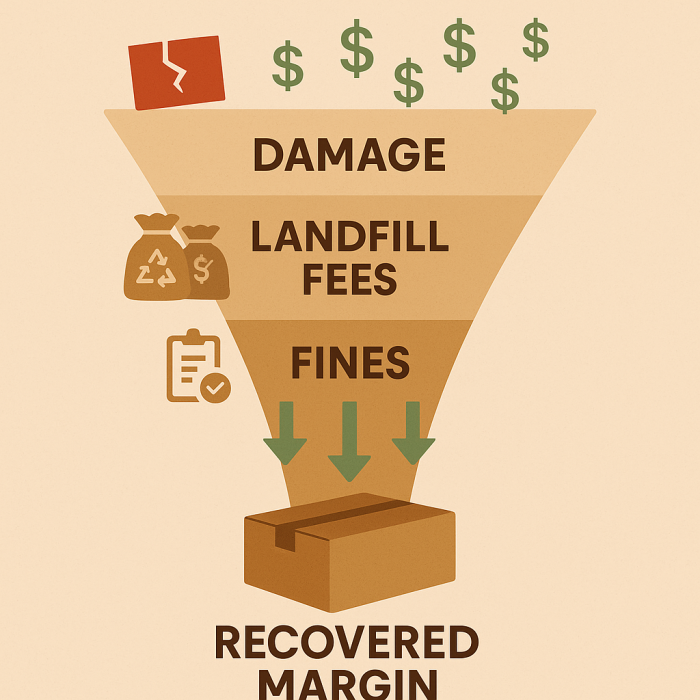
Add the costs you rarely see on the invoice:
- Damage chargebacks. Amazon data shows that optimized packaging reduces in-transit breakage by 24 percent, turning refunds into saved revenue.
- Landfill or incineration fees. The national average tipping fee reached 60 dollars per ton in 2024, up 14 percent from 2020.
- Regulatory penalties. States with Extended Producer Responsibility laws charge brand owners up to four cents per package that lacks recycled content or recyclability documentation (Maine DEP fee schedule, 2025).
Factor those numbers in, and a “cheap” box can become the most expensive line item on your P&L. The right partner helps you uncover every hidden cost, then designs a package that funds itself through freight savings, avoided fees, and fewer returns.
Vet certifications, standards, and green credentials.
A logo only counts if the body behind it is verifiable. Ask vendors for certificates you can trace and for numbers that show why they matter.
- FSC or SFI (paper). More than 160 million acres of North American forest now carry an FSC seal, and more than 2,200 United States factories hold chain-of-custody certificates. That scale makes the mark easy for customers to recognize and trust.
- BPI or ASTM D6400 (compostables). BPI lists over 50,000 certified items in its 2025 database, giving you a public registry to verify claims and a logo composters already accept.
- ISO 14001 (factories). Nearly 350,000 sites worldwide run an ISO 14001 environmental-management system, according to the latest ISO Survey. A vendor that made the cut is tracking its own impacts, not just yours.
- Voluntary coalitions. Memberships in groups such as the Sustainable Packaging Coalition or Cradle to Cradle’s Material Health program show the supplier invests in shared R&D and stays ahead of new PFAS or EPR rules.
Finally, demand transparency. A credible partner will disclose fiber sources, ink chemistry, and adhesive specs in plain language and will send the PDFs to prove it. If the paperwork stalls, walk away.
Match production muscle, logistics, and service to your growth curve.
Capacity draws the line on what you can sell. Ask each vendor for its current monthly throughput, peak-season records, and backup plan if a press goes down. A mismatch—for example, you need 50k units and they top out at 10k—almost guarantees slipped ship dates.
Consistency comes next. Recycled paper stocks vary; a converter with ISO-certified color management can hold color variance (ΔE) below 2.0 and keep board strength within ±5 percent, the tolerance most big-box retailers require.
Prototype speed matters more than ever. A Packaging Digest poll shows one-third of converters now 3D-print packaging mock-ups, shrinking design cycles from weeks to days. Faster sign-offs mean faster revenue.
Inventory is the hidden drain. Carrying costs average 20–30 percent of inventory value each year, according to NetSuite benchmarks. Partners offering just-in-time delivery or regional hubs reduce that dead weight and free up working capital.
Location finishes the math. Sourcing boxes within a day’s drive (about 500 miles) can cut transport emissions by up to 28 percent compared with cross-country hauls, recent e-truck studies show, and you will feel the savings every time diesel prices rise.
Finally, test the people factor. A responsive account manager who answers on the second ring will save more launches than the cleverest dieline ever could.
Compare finalists and make the call.
Shortlist two or three suppliers that clear every technical hurdle, then move from promises to proof.
- Match the money. Ask each team for an itemized quote on the exact same specs. In packaging RFPs, non-standard charges raise total cost by an average eight percent, according to McKinsey’s 2024 supply-chain audit. Line-item parity makes those extras impossible to hide.
- Stress-test the box. Get samples and run a three-drop test at chest height. ISTA data show that 80 percent of shipping damage occurs in the first three impacts; a crushed corner now is cheaper than a product returned later.
- Check the clock. Leading converters ship 95 percent of orders on time or better. Ask for their 12-month on-time delivery report and walk if the number starts with an eight.
- Phone a reference. Five minutes with another client reveals how the team behaves when a die goes dull the night before launch. Great partners brag about crises they solved, not trophies they display.
- Run a pilot. A 2,500-unit trial uncovers bottlenecks and defect rates without risking your season launch. PPAI’s 2024 benchmarking shows pilots cut rework costs by 12 percent on average.
- Lock the yardsticks. Put recycled-content minimums, on-time delivery of at least 95 percent, and defect ceilings no higher than one percent in the contract. If a vendor hesitates, you have learned all you need to know.
Conclusion
Sustainable packaging is no longer a branding accessory, it’s a revenue driver, a compliance shield, and a customer-experience engine. The right partner helps you hit all three at once. When you clarify your goals, vet materials, stress-test design, and quantify the true ROI, not just the sticker price, you avoid the hidden costs that sink margins and unlock savings that compound with every shipment.
A best-fit packaging partner doesn’t simply supply cartons; they engineer growth, eliminate waste, anticipate regulatory risks, and ensure every unboxing reinforces why a customer chose your brand. Choose the team that earns that trust, proves it in data, and scales with your ambition.
FAQ
1. Is eco-friendly packaging always more expensive?
Not necessarily. Although sustainable materials can cost 8–15% more upfront, right-sizing and lighter weights often cut dimensional-weight shipping fees enough to shrink the total cost gap to 3–7%. When you add avoided damage, lower waste fees, and EPR compliance savings, eco-friendly packaging frequently delivers higher net ROI than conventional options.
2. What counts as “eco-friendly” packaging?
Eco-friendly packaging generally means materials that are recyclable, compostable, reusable, or made from sustainably sourced or recycled feedstock. The right definition depends on your goals—plastic-free, reduced carbon footprint, circularity, or regulatory compliance.
3. How do I verify a vendor’s sustainability claims?
Look for traceable, third-party certifications such as:
- FSC or SFI for responsibly sourced paper
- BPI or ASTM D6400 for compostables
- ISO 14001 for factory environmental systems
- Memberships in credible groups (SPC, C2C, etc.)
Always request documentation—certificates, fiber specs, ink data, and chain-of-custody records.
4. What are the most common sustainable packaging materials?
High-performing options include:
- Recycled corrugated board and FSC-certified paper
- Plant-based or compostable films (PLA)
- Molded pulp
- Reusable packaging systems (garment bags, totes, crates)
Each offers different cost, performance, and end-of-life trade-offs, so choosing the right mix matters.
5. How do I estimate the ROI of switching to sustainable packaging?
Calculate beyond unit cost:
- Freight savings from right-sizing
- Lower damage and return rates
- Reduced landfill or incineration fees
- Avoided EPR penalties
- Higher conversion and willingness-to-pay from eco-conscious customers
- Fewer chargebacks from retailers requiring recyclability or specific tolerances
A good packaging partner will model these numbers for you.
6. How do I know whether a packaging partner can scale with my business?
Ask for:
- Monthly and peak throughput numbers
- On-time delivery records (look for 95%+)
- Press redundancy and backup plans
- Lead times for prototypes and production
- Regional fulfillment capabilities
- Quality metrics (ΔE tolerance, board-strength variance, defect rates)
A mismatch in capacity or speed is one of the biggest drivers of launch delays.
7. How many suppliers should I shortlist?
Most teams narrow it to two or three finalists. This keeps quoting consistent, testing manageable, and pilot runs cost-effective.
8. Should I run a pilot before signing?
Absolutely. A 2,500–5,000 unit test reveals bottlenecks, quality issues, or fulfillment delays before they affect peak season or major launches.
9. What should I include in the contract?
Lock in:
- Recycled-content minimums
- On-time delivery expectations (≥95%)
- Defect ceilings (≤1%)
- Clear price escalation rules
- Audit and documentation rights for sustainability claims
If a vendor resists transparency, it’s a red flag.
Post Comment
Be the first to post comment!